
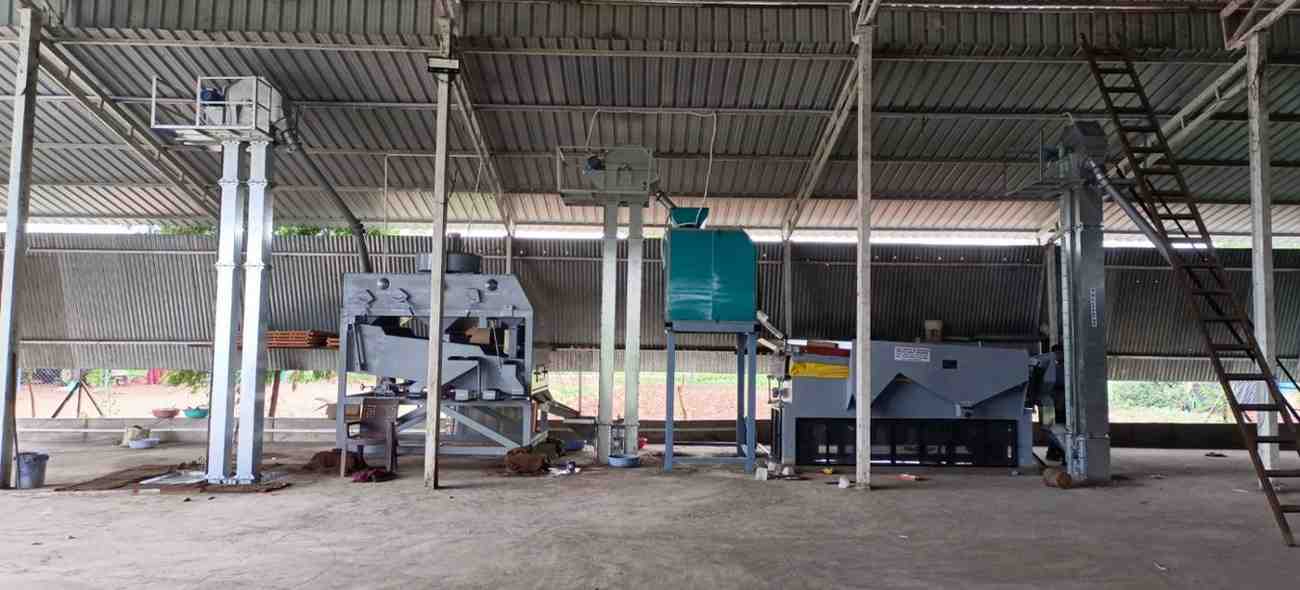
How Grading Machine Improve Seed Quality in Agriculture
Modern agriculture depends heavily on the quality of seeds. Good seeds result in better germination, higher yield, and stronger crop health. However, natural seeds collected from fields often contain impurities like dust, stones, broken grains, immature seeds, and husk particles. To solve this problem, farmers and seed processing units use Seed Grading Machines, which play a crucial role in improving seed quality and overall farm productivity.
Seed grading machines are specialized equipment designed to separate seeds based on size, weight, and physical characteristics. With the help of sieves, blowers, and vibration technology, the machine ensures that only uniform and healthy seeds are selected for planting. This not only improves the quality of the seeds but also enhances the efficiency and results of agricultural practices.
1. Removes Impurities and Foreign Materials
One of the biggest advantages of a seed grading machine is its ability to remove unwanted impurities such as:
- Dust and dirt
- Husk and chaff
- Stones and soil particles
- Broken or damaged seeds
- Insect-eaten and immature seeds
By eliminating these impurities, farmers get highly clean seeds that ensure better storage life and reduce the chances of fungal or pest infestation.
2. Enhances Germination Rate
Grading machines help separate good seeds from weak or unhealthy ones. Only uniform, healthy, and nutrient-rich seeds pass through the final output.
This significantly improves:
- Germination percentage
- Crop health
- Uniform plant growth
Better germination leads to higher yield and reduces seed wastage during sowing.